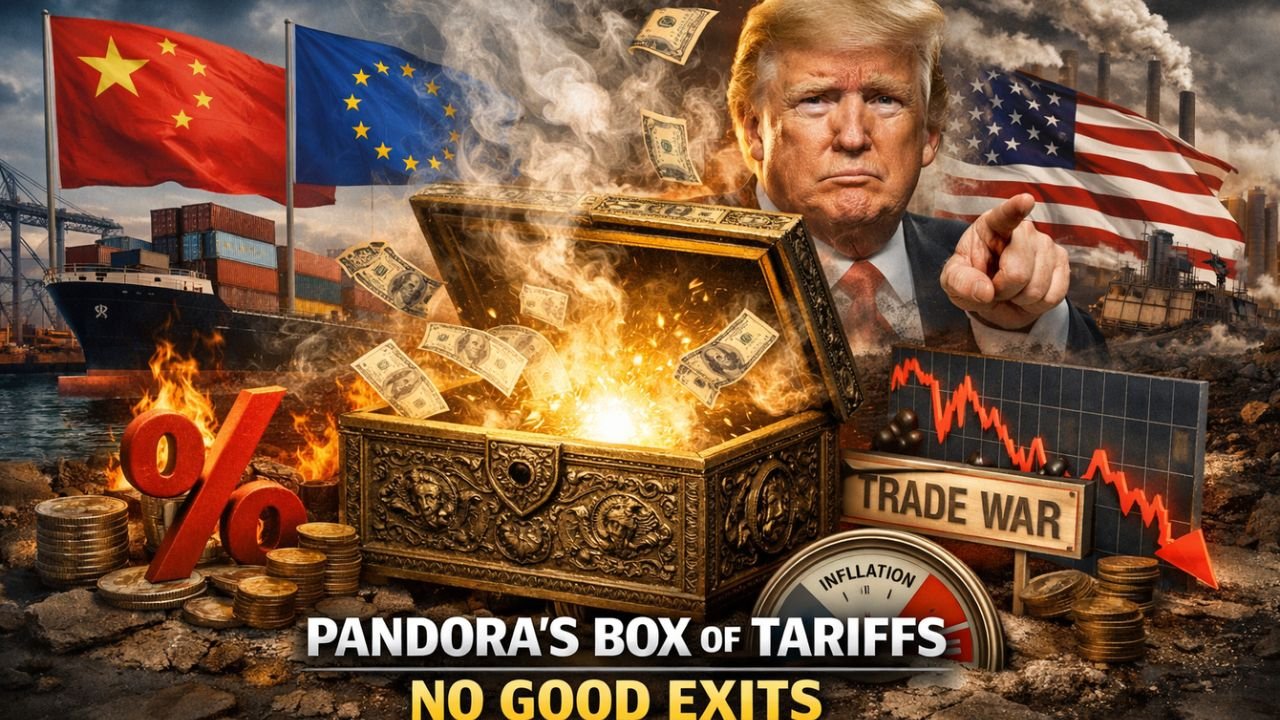
The international trade landscape is shifting once again, as U.S. President Donald Trump’s latest tariffs come into effect, stirring a wave of market uncertainty and reshaping global economic expectations. Julia Khandoshko, CEO of European brokerage Mind Money, describes the new tariffs as a “Pandora’s box with no good exits,” highlighting the complexities and risks investors now face.
Tariff Dynamics and Market Implications
The new U.S. tariffs, set at 10%, were implemented on Tuesday despite earlier rhetoric suggesting a rise to 15%. This follows a Supreme Court ruling that curtailed Trump’s authority to impose certain country-specific tariffs introduced last year. While the tariffs’ immediate economic impact is moderate, their broader implications are far-reaching, affecting inflation expectations, supply chains, and global risk sentiment.
Khandoshko noted that the tariffs effectively prolong the trade uncertainty regime. “Inflation expectations are rising through increasing import prices, and the risks of shortages are growing as a consequence,” she said. For investors, this means recalibrating risk models and reassessing asset allocations in an environment where cost pressures and geopolitical friction are intensifying.
Inflation and Investment Sentiment
Although equities continue to perform, the appetite for risk is waning. According to Khandoshko, the bullish momentum in stock markets is not ending, but volatility is increasing, particularly in treasuries, which remain relevant as a hedge amid heightened uncertainty.
“This tariff story is not a game changer in the end,” she explained. “It’s more of a light shift to the new rules for the same game.” Investors are adjusting to an environment where policy unpredictability is now a structural factor rather than a temporary shock. Import-sensitive sectors, including manufacturing and technology, are particularly vulnerable, and global supply chains may experience incremental disruptions as firms navigate higher costs and logistical hurdles.
Global Trade and Inflation Pressures
The tariffs add a new layer of inflationary pressure through elevated import prices. With higher costs for goods ranging from electronics to industrial components, companies may pass on price increases to consumers, fueling broader inflationary trends. The result is a complex environment where monetary policy and fiscal responses will play a critical role in shaping economic outcomes.
Khandoshko emphasizes that while the immediate economic impact may seem contained, the cumulative effects are likely to influence market behavior over the medium term. Investors must now incorporate potential trade-induced inflation and supply chain bottlenecks into their decision-making frameworks.
Europe’s Strategic Position
Beyond the United States, Europe faces its own set of challenges in responding to the tariffs. Khandoshko highlighted the region’s “lack of ambition” and absence of unified foreign policy as key vulnerabilities. Previously a leader in global GDP and strategic influence, Europe now risks being reactive rather than proactive in global trade disputes.

The fragmentation of policy and limited strategic autonomy may leave European markets exposed to external shocks and constrain their ability to negotiate favorable outcomes. Companies operating in Europe may face additional uncertainty, affecting capital allocation, investment strategies, and long-term planning.
Investor Strategies in a Tariff-Heavy Environment
For global investors, Trump’s new tariffs underscore the importance of risk diversification and strategic positioning. Key considerations include:
- Sector Sensitivity: Industries reliant on imports or integrated global supply chains are most exposed to tariff-related cost pressures.
- Inflation Hedges: Assets that preserve value, such as precious metals or inflation-linked instruments, may offer protection against rising prices.
- Currency Risks: Trade tensions can influence currency volatility, affecting multinational exposure and cross-border investments.
- Portfolio Flexibility: Maintaining liquidity and adaptable strategies is crucial to respond to sudden policy shifts or geopolitical developments.
Investors must navigate an environment where policy decisions, judicial rulings, and international negotiations are increasingly intertwined, creating a dynamic risk landscape that challenges conventional market assumptions.
The Broader Geopolitical Context
Khandoshko’s assessment situates the U.S. tariffs within a wider geopolitical framework. The imposition of tariffs reflects a zero-sum approach to global trade, where national interest is prioritized over collective gains. The resulting uncertainty extends beyond borders, affecting supply chains, investor confidence, and international relations.
For companies and investors alike, understanding the broader geopolitical ramifications is essential. Tariffs may serve as both a tactical tool and a strategic signal, influencing negotiations, investment flows, and global trade alignments.
Conclusion: Navigating the Pandora’s Box
Trump’s global tariffs illustrate the complexities of modern economic policy and the interconnectedness of global markets. While not immediately transformative, their implications for inflation, risk sentiment, and international trade are significant.
Investors face a landscape where traditional assumptions are being tested, requiring careful evaluation of exposure, hedging strategies, and adaptive portfolio management. Khandoshko emphasizes that in this environment, strategic awareness and flexibility are essential to navigate the evolving risks of a tariff-heavy world.
As trade tensions persist and policy unpredictability continues, market participants must remain vigilant, leveraging insights, diversified assets, and proactive risk management to protect value and capitalize on emerging opportunities.