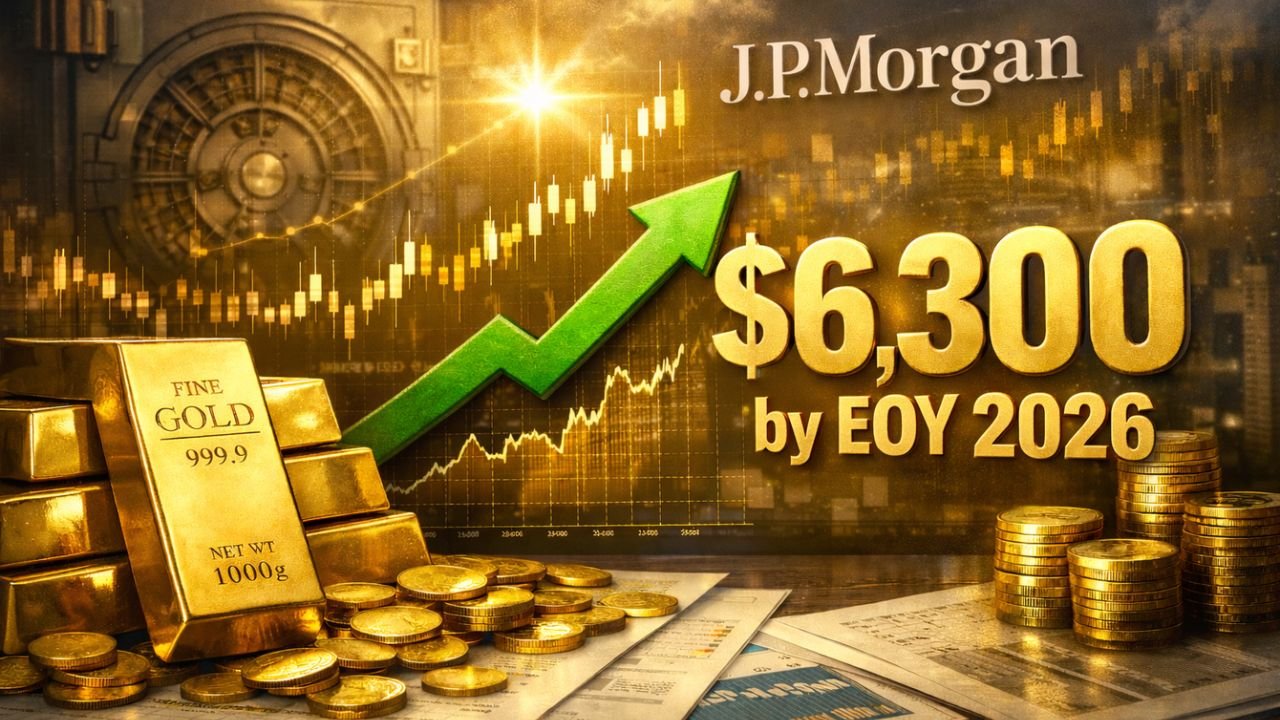
Gold is poised for a dramatic upswing, with J.P. Morgan analysts predicting a 22% increase from current levels to reach $6,300 per ounce by the close of 2026. The forecast underscores the growing influence of sustained investor demand and central bank buying in driving the yellow metal higher, while also highlighting the broader macroeconomic and geopolitical factors supporting the rally.
Strong Fundamentals Behind the Bullish Outlook
J.P. Morgan’s latest note emphasizes that robust demand from both institutional investors and central banks will be the primary catalysts for gold’s projected rise. Natasha Kaneva, head of Global Commodities Strategy at J.P. Morgan, explained that the long-term trend of reserve diversification and heightened investor interest in gold remains far from exhausted.

“The long-term trend of official reserve and investor diversification into gold has further to run,” Kaneva noted. “We expect gold demand to push prices toward $5,000 per ounce by year-end 2026, with upside potential to reach $6,300 under strong inflows.”
Several key factors underpin this bullish outlook:
- Weaker Dollar: A softening U.S. dollar traditionally lifts gold as an alternative store of value.
- Low Interest Rates: Reduced yields on U.S. Treasuries and other fiat-denominated assets increase the attractiveness of non-yielding gold.
- Geopolitical and Economic Uncertainty: Heightened volatility and risk aversion drive investors toward safe-haven assets like gold.
- Debasement Hedge: In an era of expansive fiscal and monetary policy, gold remains a hedge against currency erosion and inflationary pressures.
Investor and Central Bank Demand Driving Momentum
J.P. Morgan reported that in Q3 2025, total gold demand from investors and central banks reached approximately 980 tonnes, exceeding the four-quarter average by more than 50%. This translated into an estimated $109 billion of quarterly inflows, signaling unprecedented appetite for the metal.

Gregory Shearer, head of Base and Precious Metals Strategy at J.P. Morgan, noted that such robust inflows create a self-reinforcing cycle: “The relationship between quarterly investor and central bank demand and prices explains roughly 70% of quarter-over-quarter changes in gold prices.” Analysts estimate that net quarterly demand above 350 tonnes can drive gold prices up by approximately 2% per quarter, illustrating the power of continued buying pressure.
Central banks remain a critical pillar of support. While projected purchases for 2026 are expected to average 755 tonnes—lower than the peak of over 1,000 tonnes seen in previous years—they still represent a structural elevation compared to pre-2022 averages of 400–500 tonnes. J.P. Morgan highlights that this moderation is largely mechanical: with gold prices around $4,000 and above, central banks require fewer tonnes to reach their target reserve allocations.
ETFs, Bars, Coins, and Future Flows
Investor demand is projected to remain elevated through multiple channels. The bank anticipates 250 tonnes of inflows into gold ETFs in 2026, alongside bar and coin demand exceeding 1,200 tonnes annually. Futures positioning, though a smaller component of overall holdings, remains long, reflecting expectations for continued price appreciation.

Shearer also pointed to emerging sources of demand, including Chinese insurance companies and the crypto sector, which could further expand the gold ownership pool and amplify upward momentum. “Even modest diversification from just 0.5% of foreign U.S. asset holdings into gold could drive prices to $6,000 per ounce,” he explained.
Supply Constraints Amplify Price Potential
The supply side further supports gold’s bullish trajectory. Mining output is relatively inelastic, with production slow to respond to rising prices. As demand remains robust across central banks, institutional investors, and retail channels, the structural supply-demand imbalance favors a rapid ascent toward multi-year highs.
“With gold mine supply relatively slow to react to higher prices and demand expected to remain robust, risk continues to skew toward achieving our multi-year target faster than anticipated,” Shearer added.
Macro Context and Long-Term Implications
Gold’s projected rise to $6,300 by year-end 2026 comes amid a backdrop of persistent economic and geopolitical uncertainty. With global trade tensions, fiscal expansions, and accommodative monetary policy continuing to shape investor behavior, gold is positioned as both a strategic reserve asset and a hedge against systemic risks.
For investors, the outlook suggests not just short-term trading opportunities but also long-term portfolio considerations. Allocating to gold provides a buffer against currency debasement, equity volatility, and macroeconomic shocks, reinforcing its role as a core component of diversified investment strategies.
Conclusion: A Bull Market with Structural Tailwinds
J.P. Morgan’s forecast signals that gold is entering a critical phase of its bull market, driven by strong central bank activity, elevated investor demand, and supportive macroeconomic conditions. While short-term fluctuations and technical resistance may create volatility, the broader trend points to substantial upside potential, with the yellow metal potentially reaching $6,300 per ounce by the end of 2026.
As gold continues to serve both as a strategic reserve and a hedge against financial uncertainty, investors may find compelling reasons to strengthen exposure in portfolios, positioning themselves to capture the full trajectory of this multi-year rally.