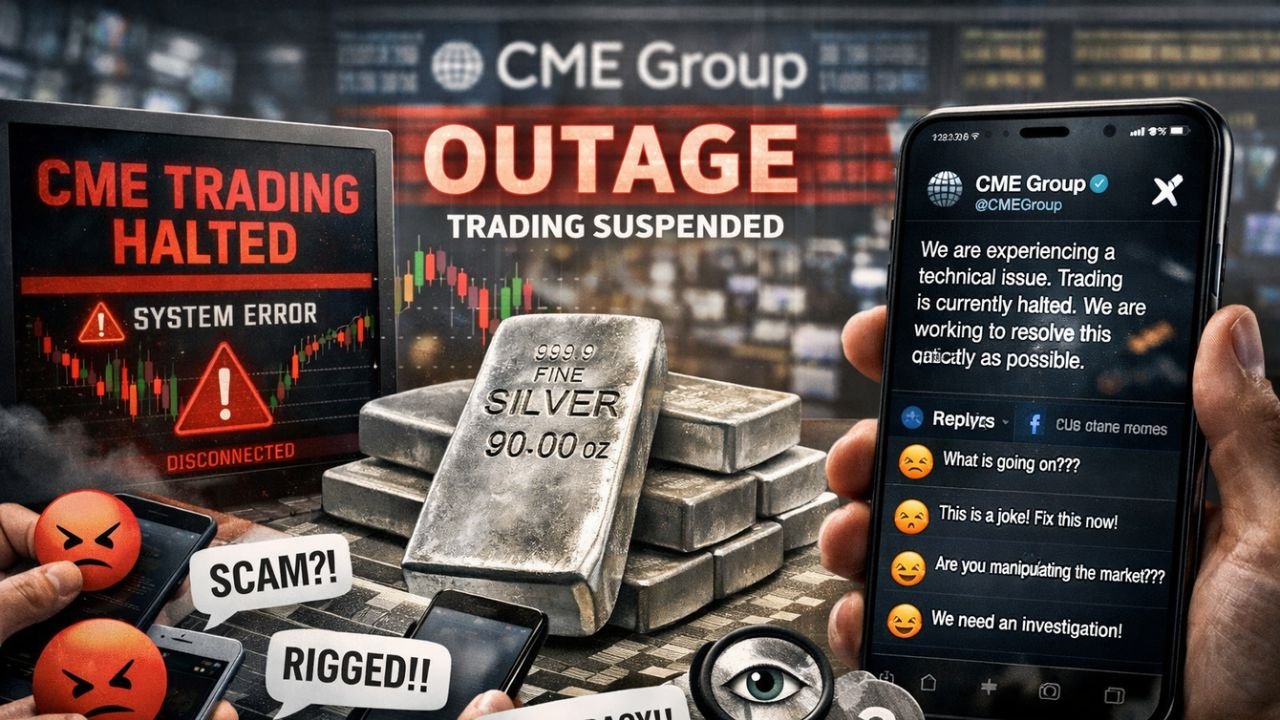
Global silver markets faced a dramatic disruption this week as the CME Group experienced a technical outage during a critical trading period. The stoppage came just as silver futures were reclaiming the $90 per ounce milestone, sending ripples of confusion, frustration, and speculation throughout both institutional and retail investor communities.
The Outage and Its Immediate Effects
On Wednesday afternoon, electronic trading for metals and natural gas on the CME Globex platform was abruptly halted. Metals markets remained offline for 90 minutes, reopening at 1:45 p.m. CT, while natural gas resumed earlier at 12:50 p.m. All day orders and GTDs from that date were canceled, though acknowledged GTC orders continued to function.

The timing was particularly sensitive. Silver was testing highs above $91 per ounce, just ahead of the first notice day for March contracts, a pivotal moment for both hedgers and speculators. Kevin Grady, president of Phoenix Futures and Options, acknowledged that while the outage disrupted metals trading, it posed greater challenges in energy markets where delivery obligations are immediate. “Metals traders can retender notices, but energy contracts don’t allow that flexibility,” he explained.
Physical Market Pressure Intensifies
Billionaire investor Eric Sprott highlighted the widening gap between paper markets and physical silver supply. “There’s no doubt there’s a physical short squeeze underway,” he told Kitco News. Sprott pointed to recent outflows in Shanghai, where inventories dropped 10 percent in a single day, leaving roughly 11 million ounces—an alarmingly low level for a market of China’s size.
Meanwhile, Western institutions remain heavily leveraged in paper positions. Sprott noted that Comex still holds a short position of approximately 500 million ounces, underscoring the systemic strain as physical supply continues to evaporate. This divergence between paper and physical markets amplifies volatility and heightens the risk of sharp price dislocations.
Questions of Market Integrity

The CME outage quickly became a focal point for skepticism. Peter Schiff, CEO of Euro Pacific Asset Management, suggested that the official technical failure explanation might obscure deeper liquidity or structural issues. “If they have a real problem, they don’t want the market to know,” Schiff stated. He added that halting trading during a period of surging demand could be a strategic move to prevent prices from moving even higher.
Retail traders took to social media to voice outrage and suspicion. Posts ranged from confusion to accusations of market manipulation, with some alleging deliberate interventions to suppress silver’s momentum. One trader highlighted a spike in selling activity during the outage, calling for regulatory scrutiny to protect the market’s integrity.
Silver’s Resilience Amid Turmoil
Despite the disruption and controversy, silver demonstrated remarkable resilience. By Friday morning, the metal broke decisively above $91 per ounce, fueled by geopolitical tensions, including U.S. evacuation orders ahead of potential military strikes on Iran. This move highlighted silver’s role not only as an industrial commodity but also as a safe-haven asset during periods of global uncertainty.

Market analysts emphasize that such volatility underscores the unique dynamics of silver. The interplay between paper derivatives and finite physical supply creates an environment where strategic positioning, geopolitical developments, and market infrastructure can converge to produce rapid price movements.
Structural Implications for Investors
The CME outage underscores broader structural concerns within the metals markets. As trading becomes increasingly electronic and centralized, technical vulnerabilities can have outsized effects, particularly during periods of heightened demand. Investors are now more acutely aware of the risks associated with reliance on a single trading infrastructure.
Moreover, the episode highlights the growing importance of physical metal holdings. As Sprott noted, institutional and sovereign demand for tangible silver continues to deplete inventories, reinforcing the divergence between paper and physical markets. Investors seeking to hedge against market disruptions may increasingly turn to allocated physical holdings, ETFs backed by tangible metals, and diversified precious metal strategies.
Geopolitical Catalysts Amplify Volatility
Geopolitical events remain a powerful driver of metals markets, and silver is no exception. The recent escalation in Middle East tensions contributed to the metal’s rapid recovery above $91 per ounce. Analysts point out that while technical outages and market interruptions can temporarily distort pricing, fundamental drivers such as global supply constraints, industrial demand, and geopolitical risk ultimately dictate longer-term trends.
Lessons and Takeaways
The CME outage serves as a stark reminder of the fragility and interconnectedness of modern commodity markets. Investors must navigate not only price risk but also operational and structural risks inherent in electronic trading systems.
Key takeaways for market participants include:
- Physical versus Paper Supply: Understanding the divergence between futures markets and tangible holdings is critical.
- Infrastructure Risk: Even leading exchanges can experience technical failures, affecting liquidity and settlement.
- Geopolitical Sensitivity: Metals remain highly responsive to global events, underscoring their dual role as commodities and safe-haven assets.
- Strategic Allocation: Diversifying holdings between paper contracts, physical assets, and ETFs can mitigate exposure to market disruptions.
Conclusion
While the CME outage sparked confusion, suspicion, and outrage, silver emerged resilient, underscoring the metal’s enduring appeal as both a strategic industrial commodity and a safe-haven investment. The episode highlights the need for investors to consider physical supply, infrastructure reliability, and geopolitical context when navigating metals markets. As volatility persists and global tensions rise, silver’s role as a hedge against uncertainty is likely to remain as compelling as ever.