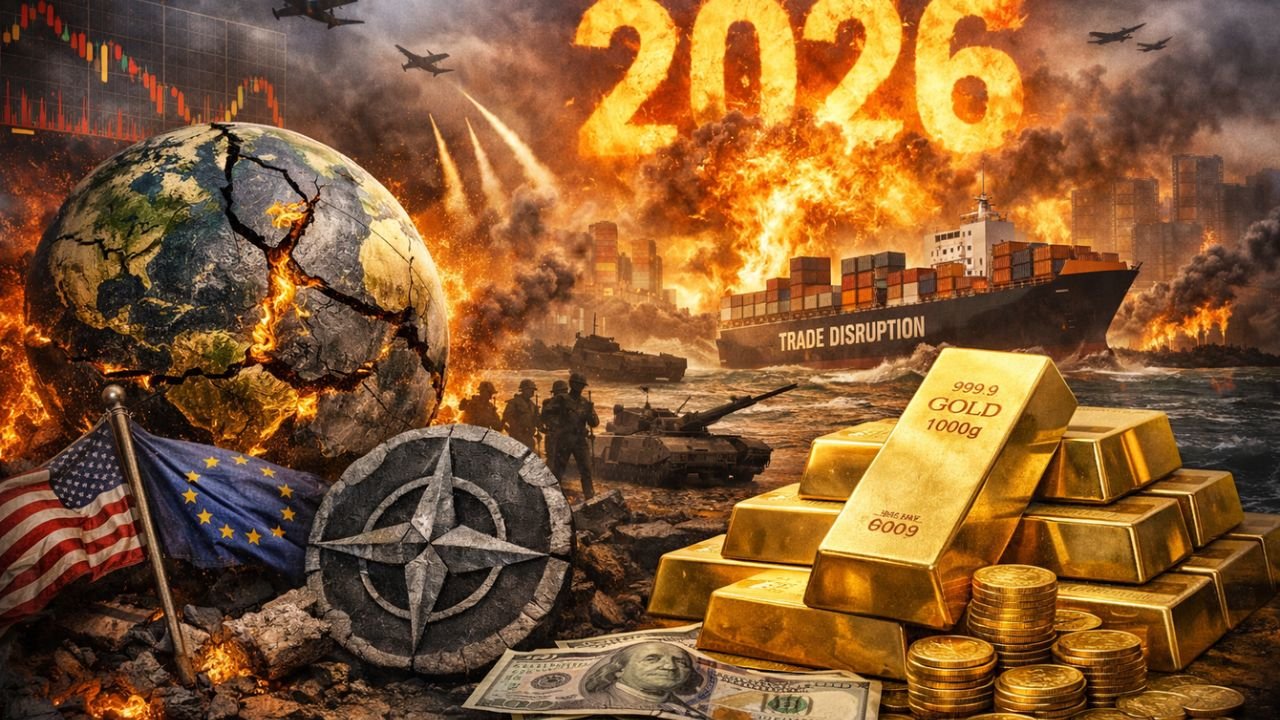
As global economic and political structures face mounting pressures, investors are increasingly turning to gold as a neutral, reliable store of value. Paul Wong, executive at Sprott, underscores that the ongoing deglobalization and currency debasement trends are paving the way for a new global monetary framework—what many are calling Bretton Woods III. In this environment, gold is positioned not merely as a commodity but as a cornerstone of financial stability.
Deglobalization and the Rise of Gold
The last decade has witnessed a gradual unraveling of post-WWII alliances, international norms, and the assumptions underpinning global currencies. According to Sprott’s 2026 outlook, this deglobalization trend has reached a critical point, with geopolitical tensions and resource nationalism reshaping trade, finance, and investment flows.

“Gold, as a strategic neutral reserve asset, and critical minerals such as rare earths, copper, and silver, have become geopolitical tools,” Wong notes. Resource-rich nations leverage these assets to strengthen bargaining power, attract investment, and secure technological and defense capabilities. Mining equities and commodity ETFs are poised to benefit as demand for these metals grows in defense, energy, and technology sectors.
As countries diversify reserves away from the U.S. dollar, gold’s role as a globally accepted neutral asset is expanding. It is increasingly viewed as a hedge against systemic risk, inflation, and geopolitical uncertainty, providing stability in an otherwise volatile landscape.
Fiscal Dominance and the Debasement Trend
One of the defining structural shifts of recent years is the entrenchment of fiscal dominance—where government spending and debt management dictate monetary policy rather than inflation control. Wong and Sprott analysts highlight that this environment fuels the “debasement trend,” a secular rotation toward hard assets as fiat currencies erode in purchasing power.

“The debasement trade isn’t just a market phenomenon anymore; it’s a structural allocation trend,” Wong explains. Institutional investors are recognizing the need to protect capital against currency depreciation, while mainstream investors are gradually moving toward acceptance, though positioning remains limited. Even small incremental shifts in investor allocation to gold can have outsized impacts on prices due to the market’s relative size.
Central Banks as Driving Forces
Central banks remain the largest and most consistent buyers of gold. Wong emphasizes that these institutions are not selling; they are accumulating, creating a strong underlying demand floor. This is compounded by global uncertainty—from geopolitical conflicts and volatile trade policies to steepening yield curves in developed nations.
Gold’s appeal lies in its neutrality and universal acceptance. In a world fragmenting into power blocs, it serves as a reference currency, facilitating trade between nations that might otherwise face currency disputes. “Gold fits the bill for multiple reasons,” Wong notes. “It’s the neutral reserve asset everyone agrees on.”
Fragmentation of Global Metal Inventories

Another emerging theme is the disruption of traditional global metal inventory systems. Once anchored by efficient trade, centralized warehousing, and transparent exchanges like the LME and CME, the system is now fracturing due to geopolitical tensions, resource nationalism, and tariff walls.
“This fragmentation is developing in real-time,” Wong says. “Until the trend is broken, disruptions in metals—especially critical ones like silver—will continue, impacting global trade, industrial production, and strategic reserves.”
The Case for Bretton Woods III
With currencies being weaponized and alliances in flux, Wong predicts the necessity of a new global monetary framework. Bretton Woods III would provide a neutral reserve system to facilitate international trade and investment amid geopolitical fragmentation. Gold, he asserts, will play a central role.
“Call it Bretton Woods Three, call it what you want, but as the world breaks up, you’re going to need a monetary reserve system,” Wong explains. While the exact structure is uncertain, the importance of gold is indisputable. Its scarcity, liquidity, and universal recognition make it the ideal anchor in any future monetary regime.
Run-It-Hot Policy and Inflation Dynamics
The intersection of fiscal dominance and highly accommodative monetary policy sets the stage for sustained inflation. Governments are increasingly willing to tolerate inflation as a tool for managing deficits and debt. In such a landscape, traditional hedges lose efficacy, and precious metals, real assets, and inflation-linked instruments become critical portfolio allocations.
Bonds, in contrast, face headwinds as rising inflation and short-term funding pressures erode real returns. Wong highlights that central banks’ reserve management purchases—essentially a form of monetary expansion—reinforce the demand for hard assets, with gold positioned as the ultimate beneficiary.
Gold’s Enduring Strength
Despite periods of volatility, Wong emphasizes that gold remains underowned and undervalued relative to its strategic importance. It continues to attract both institutional and retail investors, central banks, and sovereign wealth funds, reinforcing its status as a globally recognized store of value.
“In a world of competing currency blocs, persistent deficits, and policy interdependence, gold stands alone,” Wong asserts. Even as markets speculate on short-term price moves, the long-term trajectory is shaped by structural forces—deglobalization, currency debasement, fiscal dominance, and geopolitical uncertainty—all of which point to gold’s centrality in a rapidly changing world.
Conclusion
As 2026 unfolds, investors and policymakers are navigating a landscape marked by fragmentation, inflationary pressures, and rising geopolitical risk. Gold, by virtue of its neutrality, liquidity, and historical resilience, stands uniquely positioned to serve as a global monetary anchor. Whether in facilitating international trade, hedging against currency debasement, or anchoring a future Bretton Woods III system, gold’s strategic significance is unlikely to be challenged.
In the words of Wong: “Gold is part of the solution, and it will be a bigger part than it is right now.”