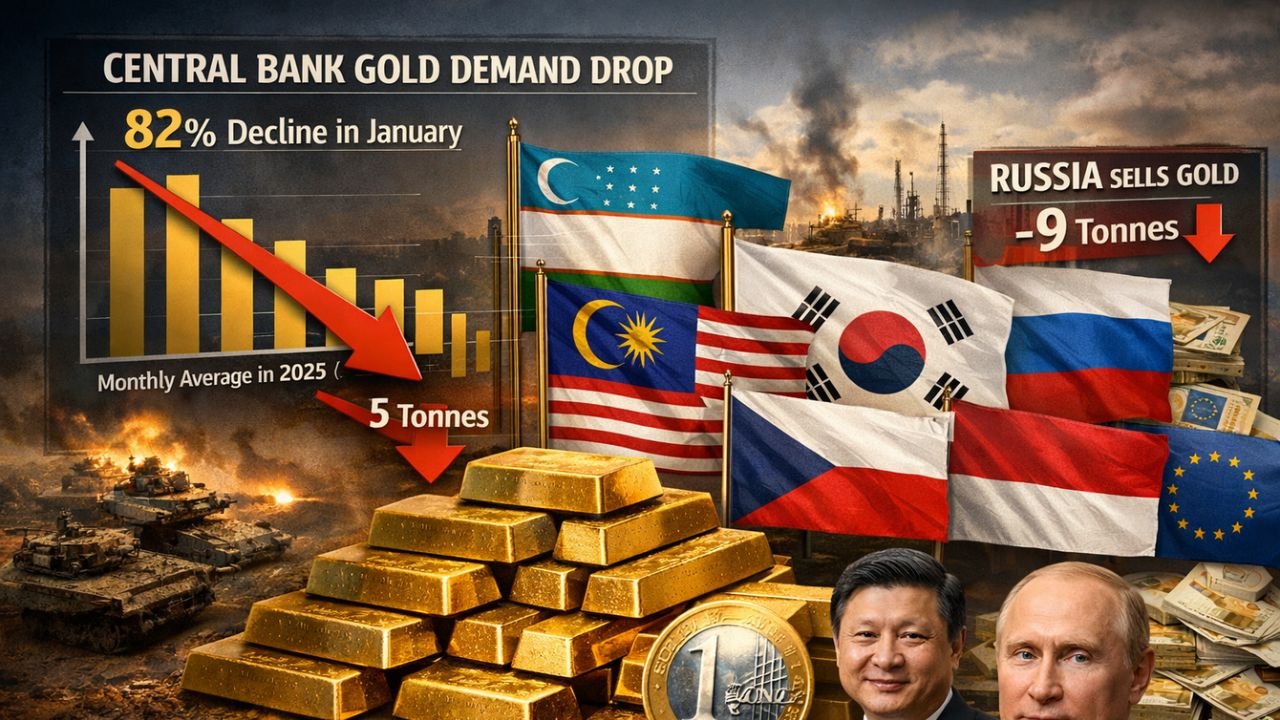
Despite a significant drop in gold purchases by central banks at the start of 2026, the market is witnessing a notable broadening of sovereign participation, suggesting that gold reserve accumulation remains a strategic priority for nations amid geopolitical uncertainty. Data from the World Gold Council (WGC) highlights this evolving dynamic, as traditional buyers slowed while new entrants entered the market.
Gold Buying Slows but Remains Strategic
Central bank gold purchases in January totaled just 5 tonnes, a steep 82% decline from the 12-month average of 27 tonnes in 2025, according to Marissa Salim, Senior Research Lead, APAC, at the WGC. The slowdown is attributed to seasonal factors, including the holiday period, as well as volatility in gold prices that may have prompted some central banks to pause accumulation.

“Volatile gold prices and the holiday season may have given some central banks pause, though geopolitical tensions, which have shown little sign of abating, are likely to keep accumulation going through 2026 and beyond,” Salim noted.
New Entrants Signal a Broadening Demand Base
While overall volumes were lower, the number of central banks participating in gold purchases is expanding. Notably, Bank Negara Malaysia returned to the market after a hiatus since 2018, acquiring 3 tonnes and lifting its gold reserves to 42 tonnes, roughly 5% of total reserves. Similarly, the Bank of Korea made its first gold-related investment in over a decade, announcing plans to integrate overseas-listed physical gold ETFs into its foreign reserve portfolio, citing liquidity and tradability advantages over physical bullion.
Asia and Eastern Europe led sovereign activity, with Uzbekistan continuing its buying streak by acquiring 9 tonnes, raising its reserves to 399 tonnes. This reflects a remarkable trajectory, as Uzbekistan’s gold reserves grew from 57% of total reserves in 2020 to 86% by January 2026. Other buyers included the Czech Republic and Indonesia, each adding 2 tonnes, while China and Serbia bought 1 tonne each.
Sellers and Market Adjustments

Not all central banks increased holdings. Russia emerged as the largest net seller in January, offloading 9 tonnes of gold. Bulgaria also divested 2 tonnes, transferring the metal to the European Central Bank as part of its adoption of the euro on January 1, 2026. Kazakhstan and Kyrgyzstan each sold 1 tonne from their reserves, reflecting ongoing portfolio management and alignment with strategic economic objectives.
ETFs Gain Traction Among Central Banks
The Bank of Korea’s decision to use gold ETFs marks a notable shift in reserve management strategies. Traditionally, central banks have relied exclusively on physical gold for reserve accumulation, with ETFs being uncommon due to concerns over counterparty risk and liquidity. The WGC’s 2025 Central Bank Gold Reserves Survey found that none of the surveyed institutions had used ETFs as a primary method of acquisition.
The adoption of ETF structures allows central banks to achieve greater flexibility and efficiency, offering a liquid, easily tradable form of gold exposure without the logistical challenges associated with physical storage. Analysts suggest that this trend could influence other sovereigns to consider alternative methods of gold investment, particularly in times of heightened market volatility.
Implications for 2026 and Beyond

The broadening of central bank participation underscores gold’s continued strategic role in global reserves. With geopolitical tensions escalating, particularly the ongoing US-Iran conflict, nations are increasingly seeking to diversify and strengthen their reserve portfolios. The WGC emphasizes that the market’s resilience depends not only on volumes but on the diversity of participants and their long-term commitment to gold as a reserve asset.
“As we have seen in January, both Malaysian and Korean central banks have resumed interest in increasing gold exposure after prolonged absences,” Salim said. “The next 10-15 days could prove crucial in shaping the geopolitical backdrop this year, as US-Iran tensions continue to escalate with little indication of diplomatic resolution in sight. The strong pace of gold accumulation by central bankers since 2022 has been intertwined with how nations position themselves in a shifting world order.”
Strategic Takeaways
- Diversified Participation Matters: While overall volumes dipped, the entry of new sovereign players signals a healthier, more resilient demand base for gold reserves.
- Geopolitical Risk Drives Strategy: Central banks continue to view gold as a hedge against instability, making it a core component of national financial security.
- Innovation in Gold Investment: The integration of gold ETFs offers a flexible, efficient alternative for central banks, potentially reshaping traditional reserve accumulation strategies.
- Long-Term Confidence in Gold: Even with temporary fluctuations, central bank engagement and broader sovereign interest indicate sustained confidence in gold as a key strategic asset.
As the year progresses, market participants will watch closely how geopolitical developments and sovereign strategies impact both demand and pricing. While January’s drop in volume might appear concerning, the broader trend points to a diversified, increasingly sophisticated approach to gold reserves that is likely to support the market throughout 2026 and beyond.