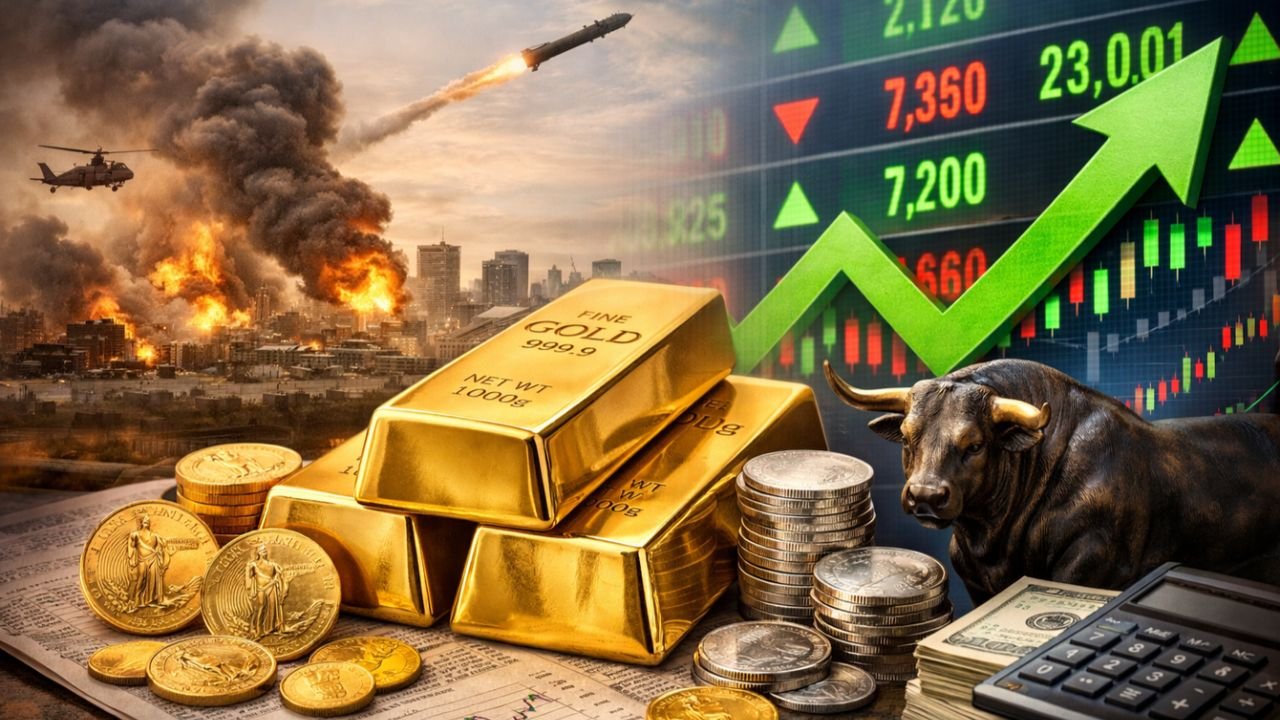
Geopolitical conflicts, like the ongoing tensions in Iran, often trigger anxiety across financial markets. Headlines suggest economic doom, but historical data tells a more nuanced story. According to George Smith, Portfolio Strategist at LPL Financial, markets are far more resilient than many investors assume, even during dramatic global events.
Markets React, but Shock Is Often Temporary
Smith’s research spans more than eight decades of market history, examining how equities, gold, and other assets respond to crises such as wars, political upheavals, terror attacks, corporate failures, and financial shocks. One clear takeaway: while market reactions to unexpected events are immediate, they are usually short-lived.

“Across more than two dozen major geopolitical events since World War II, the S&P 500 has produced an average one-day decline of just -1%,” Smith notes. “Even seemingly dramatic world events tend to trigger notable, but not catastrophic, drops. Markets typically absorb shocks quickly, bottoming on average within 18 days and returning to pre-event levels within about 39 days.”
Importantly, the scale of the event does not necessarily predict the depth or duration of the market reaction. Rather, underlying economic conditions largely determine the eventual impact.
Recession vs. Expansion: The Key Differentiator
The most significant factor influencing post-shock performance is whether the economy is in or near a recession. If a shock occurs during an expansion, markets often remain flat to slightly positive over the following month and show gains over three, six, and twelve months. Historical data indicates that in non-recessionary periods, the S&P 500 has returned an average of +9.9% in the 12 months following a shock.

Conversely, shocks during or near recessions exacerbate vulnerabilities, with average 12-month post-shock returns falling to -11.5%. “Shocks can amplify existing weakness, but they rarely derail fundamentally sound economies,” Smith explains. Understanding where the economy stands is therefore critical for investors evaluating risk.
Cross-Asset Performance During Crises
Different asset classes react in predictable ways during periods of uncertainty. Equities typically rotate toward defensive sectors such as utilities, staples, defense, and gold miners. Growth-oriented and cyclical sectors often lag amid heightened volatility but tend to rebound as uncertainty fades.
Small-cap equities are more sensitive to shocks, frequently underperforming due to their higher risk profiles. Meanwhile, a strong U.S. dollar, often seen as a safe haven during geopolitical crises, can weigh on unhedged international equities.

Fixed income markets also absorb excess liquidity, with investors flocking to Treasuries during periods of risk aversion. This “flight-to-safety” generally pushes yields lower as rate expectations adjust, particularly if growth expectations deteriorate. Energy markets, on the other hand, may see temporary spikes in prices due to supply concerns, though these often normalize once supply chains prove resilient.
Gold and Precious Metals: Reliable Safe Havens
Among all assets, gold and precious metals consistently outperform during crisis periods. They attract initial inflows immediately following shocks and often maintain strength if inflation expectations rise. However, strong U.S. dollar movements can temporarily pressure prices, especially when metals are technically overbought after a rally.
“Gold remains one of the most reliable safe haven assets during global shocks,” Smith emphasizes, noting that market history shows a consistent pattern of resilience for bullion during geopolitical or economic uncertainty.
Lessons for Investors
Smith’s analysis underscores several key lessons for navigating market turbulence:
- Volatility Is Normal: Shocks create immediate market swings, but these rarely translate into long-term economic collapse.
- Economic Context Matters: The underlying strength of the economy is more important than the headline event itself.
- Diversification Works: Cross-asset exposure—including equities, bonds, and precious metals—helps mitigate short-term shocks.
- Avoid Emotional Decisions: History shows markets rebound quickly, emphasizing the value of disciplined, long-term investing over reactionary trades.
Strategic Takeaways
Investors can leverage these insights to navigate geopolitical uncertainty with confidence. Gold and defensive sectors often provide stability, while growth and cyclical assets may offer opportunities once volatility subsides. Fixed income can serve as a buffer against short-term disruptions, and careful attention to economic indicators helps determine the likely trajectory of markets.
In essence, crises like the Iran conflict do not automatically signal economic doom. Markets adapt, recover, and often reward patient, diversified investors. Understanding historical patterns and focusing on the broader economic cycle provides a roadmap to making informed, strategic investment decisions during periods of global uncertainty.
Conclusion
While geopolitical events naturally stir fear, market history consistently demonstrates resilience. Equities may fluctuate, gold often strengthens, and diversified portfolios tend to weather shocks with relative stability. For investors, the lesson is clear: maintain perspective, monitor the economic backdrop, and rely on disciplined strategies rather than reacting emotionally to headlines.